Vodafone Group Plc logo

Vodafone Group Plc: Phone Bills, Fibre and Mobile Money

Vodafone sells mobile and broadband subscriptions to households and companies across Europe and Africa, and runs mobile money services used by tens of millions of Africans.

LSE:VOD
$119.40-0.29%
Updated: Aug 18, 2026
Technology
largeuk

Bull & Bear Case

An overview of the main reasons to invest and the key risks involved.

Bull Case

Africa arm grows far faster than Europe

Vodacom's African markets grow revenue at double-digit rates while European growth stays close to flat.

Mobile money adds a second revenue engine

M-Pesa and Vodafone Cash earn fees from payments, lending and savings, not just calls and data.

UK merger targets £700m of annual savings

Combining the Vodafone and Three networks aims to cut yearly cost and capital spending by £700 million.

Bear Case

Vodafone keeps losing broadband and mobile customers in Germany

Its largest market is shedding subscribers as rivals discount, leaving growth dependent on price rises.

Networks demand constant heavy investment

Spectrum licences, fibre and 5G upgrades absorb cash every year regardless of how trading goes.

Emerging-market currencies can erase reported growth

Fast African and Turkish growth in local money shrinks or vanishes once converted into euros.

Executive Summary

About Vodafone

Vodafone sells mobile and home broadband subscriptions to households and businesses, billed monthly, across Germany, the UK, six smaller European markets, Türkiye and much of Africa. Business customers also buy cloud, security and connected-device services, and its African arm runs mobile wallets, M-Pesa and Vodafone Cash, used by tens of millions of people to pay, save and borrow.

The debate is about two very different halves. Africa grows revenue at double-digit rates, while Europe barely grows and Germany has been losing customers to cheaper rivals. Bulls point to African growth, mobile money and savings from the UK merger with Three; sceptics note the relentless cost of networks and currency risk.

Investment Thesis

Overview of buy and sell case of the business.

Why Invest?

Key pieces of information about the business that you need to know about.

Africa arm is growing far faster than Europe

Africa, run through the Vodacom group in South Africa, Egypt, Tanzania, the DRC, Mozambique, Lesotho and now Kenya, supplies roughly a fifth of group service revenue and grows at double-digit rates, while European revenue has been close to flat. The reason is structural rather than cyclical: data use, smartphone ownership and digital payments are all still expanding from low bases. European rivals such as Deutsche Telekom, Orange and Telefónica have nothing of comparable scale in sub-Saharan Africa, which makes this the clearest point of difference in the group.

Mobile money adds a second revenue engine

Through M-Pesa in Vodacom's international markets and Vodafone Cash in Egypt, Vodafone earns fees when customers send money, pay merchants, save or borrow using a phone rather than a bank account. M-Pesa alone accounts for close to a third of service revenue in Vodacom's international markets and serves tens of millions of active users. Financial services are stickier than a phone contract, because a wallet holding a customer's money and credit history is harder to switch away from than a SIM card.

UK merger targets £700m of annual savings

Vodafone UK and Three UK combined their networks, and management expects £700 million of annual cost and capital expenditure savings by the 2030 financial year, mostly in running costs. Sharing masts and spectrum, the airwave licences that carry mobile traffic, means one network instead of two covering the same streets. Vodafone has also agreed to buy out its partner CK Hutchison, which would leave it sole owner. Combined, the business competes with BT's EE and Virgin Media O2 in a market that has consolidated from four national networks to three.

Catalysts

The key events that could drive investment opportunities and shift markets.

Near term
  • VodafoneThree Briefing: The next stretch for Vodafone is mostly about proving that its bigger UK network, its newly controlled Kenyan business and its cost cuts translate into cash. An investor briefing on 8 October 2026 is scheduled to set out VodafoneThree's strategy and growth plans, giving outsiders the first detailed view of how the merged UK business intends to earn its keep.

  • Safaricom Consolidation: Kenya's Safaricom is being counted fully in group figures from 1 July 2026 after Vodacom lifted its stake to 55%. Company guidance attributes about €1.1 billion of extra adjusted earnings on a nine-month basis, with no addition to free cash flow in the same year.

Medium term
  • Three Buyout Completion: Vodafone has agreed to buy out CK Hutchison's stake in the VodafoneThree joint venture for £4.3 billion, which on completion would leave it sole owner of the UK business and entitled to all of the merged network's future earnings.

  • Greek Fibre Venture: Vodafone Greece and Public Power Corporation have signed heads of terms for a 50:50 fibre joint venture covering more than 1.6 million homes. If due diligence and regulatory approval complete, it would pool both fibre networks and sell wholesale access to rival internet providers.

Long term
  • UK Synergy Delivery: Management expects £700 million of annual cost and capital expenditure savings from the UK merger by the 2030 financial year, most of it in running costs. Delivery would lower the ongoing cost of operating the combined network.

  • European Cost Programme: Vodafone has identified around €2 billion of gross efficiency and synergy potential and a €1 billion net reduction in European operating costs across the 2027 to 2030 financial years, which would lift group cash generation if achieved.

Key Risks

Key pieces of information about the business risks that you need to know about.

Vodafone keeps losing broadband and mobile customers in Germany

Germany is Vodafone's largest market at roughly a third of service revenue, and it has been shedding contract mobile, broadband and TV customers while rivals push promotional offers. Management is deliberately trading volume for higher prices per customer. If that trade stops working, a shrinking base eventually caps revenue growth however much prices rise, and the group's biggest profit pool is the one under pressure.

Networks demand constant heavy investment

Owning mobile and fibre networks means spending continuously whether trading is good or bad. Vodafone Türkiye paid US$627 million for 5G airwaves, Mozambique required a further licence payment, and fibre build in Germany and Greece runs through joint ventures that still consume capital. Group capital spending runs at around 18% of revenue. Restructuring and integration costs sit on top, and cash committed to networks is cash unavailable to shareholders.

Emerging-market currencies can erase reported growth

Much of Vodafone's growth is earned in South African rand, Egyptian pounds, Kenyan shillings and Turkish lira, then reported in euros. When those currencies weaken, strong local growth shrinks on translation, and Türkiye is accounted for under special rules for economies with very high inflation. Reported and underlying growth can therefore point in different directions, which makes the true trajectory harder for outsiders to read.

Investor Materials

Access the most recent investor updates published by the company.

Key Documents

Team

Meet the experienced professionals leading our organization
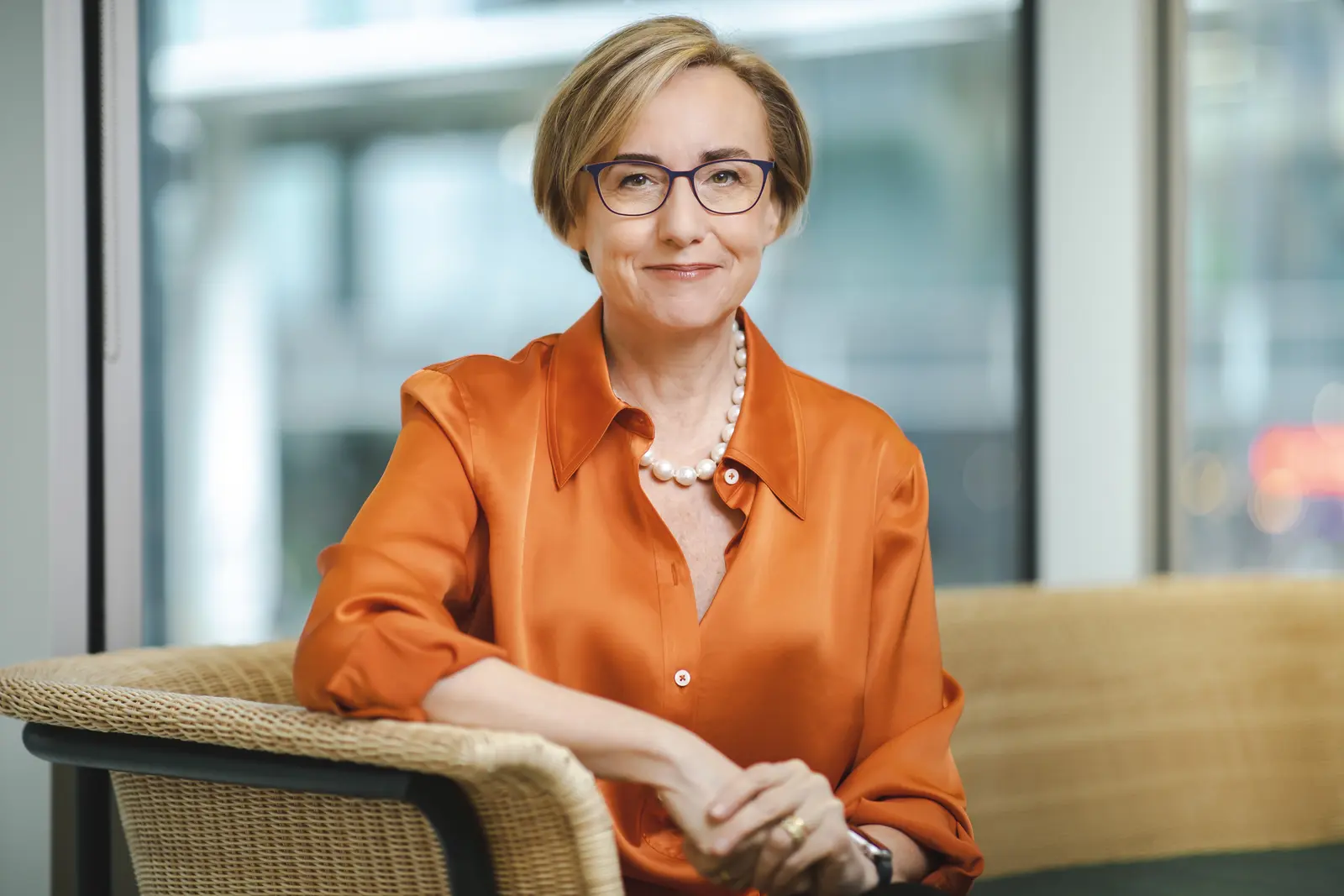
Margherita Della Valle - undefined

Margherita Della Valle

Pilar López - undefined

Pilar López

Scott Petty - undefined

Scott Petty

What the Pros are asking

Here are the questions that professional investors are asking before making an investment decision.

How does Vodafone actually make its money?

Most of the money arrives as recurring monthly payments for services: mobile airtime and data, home broadband, and fixed lines. The company calls this service revenue, and it is the bulk of the total. On top sit equipment sales such as handsets, wholesale fees from letting other operators use its networks, business services including cloud, security and connected devices, and fees from mobile wallets in Africa. Germany contributes roughly a third of service revenue, the UK about a quarter and Africa about a fifth.

Why is Germany such a problem when it is the biggest market?

Germany matters most and has been the hardest to fix. Competition in German mobile and broadband is intense, and Vodafone has chosen to protect prices rather than chase every customer, so its contract mobile, broadband and TV bases have been shrinking. Broadband prices for new customers have risen sharply, which supports revenue for a while. The risk is arithmetic: if the customer base keeps falling, higher prices per customer eventually stop offsetting it, and Germany sets the tone for the whole group.

What is M-Pesa and why do investors care about it?

M-Pesa is a mobile money service that lets people send cash, pay shops, save and borrow using a basic phone, in markets where many customers have no bank account. Vodafone earns fees on those transactions rather than selling data. It matters because the revenue grows faster than traditional calls and data, and because a wallet holding someone's money and borrowing record is harder to abandon than a SIM card. In Vodacom's international markets it already represents close to a third of service revenue.

Is the merger with Three in the UK a good deal or just a bigger version of the same problem?

The answer depends on whether the promised savings actually appear. The case for it is that two national networks covering the same streets cost far more than one, so management expects £700 million a year in cost and capital expenditure savings by the 2030 financial year, and sharing spectrum has already widened 5G reach. The counter is that mergers of this size take years to integrate, carry restructuring costs, and Vodafone has agreed to pay CK Hutchison £4.3 billion for full ownership.

What should I watch to know whether the turnaround is working?

Watch three things over several reporting periods rather than one. First, whether Germany's customer numbers stop falling, because price rises alone cannot carry the biggest market indefinitely. Second, whether promised cost savings in Europe and the UK show up as lower operating costs and higher free cash flow, the cash left after running and building networks. Third, whether African growth still converts into euro growth once currency moves are applied, since translation can erase strong local performance.