Essential Metals for the Energy Transition
PGMs and chrome enable decarbonisation and industrial demand.

An overview of the main reasons to invest and the key risks involved.
PGMs and chrome enable decarbonisation and industrial demand.
Two long-life, low-cost projects already underway.
Cash generative, dividend paying, with upside from buybacks.
Zimbabwe risks could affect Karo’s timing or economics.
Execution stumbles in underground transition or project delivery.
PGM price drops would hit revenue and margins.
Tharisa is a dual-listed, integrated resources group mining platinum group metals (PGMs) and chrome concentrates in South Africa, with a second major project under development in Zimbabwe. Uniquely, it co-produces PGMs and chrome from the same ore body and controls the entire value chain from exploration to logistics. It also operates its own beneficiation and energy-tech arms through Arxo Metals and Redox One, creating one of the most vertically integrated miners in its peer group.
For investors, Tharisa offers a rare combination: long-life assets, embedded growth projects, a strong balance sheet, and an in-house innovation pipeline. The company is actively transitioning its South African operation to underground mining, a move that supports consistent long-term output with improved grade and stability. Meanwhile, the Karo Platinum project in Zimbabwe represents a tier-one PGM growth opportunity with construction already well advanced.
In a softer pricing environment, Tharisa still delivered $80.8 million in net profit in FY 2025. With prices recovering, H1 FY26 revenue rose 28% to $359.4m and net profit reached $46.6m, already more than half of FY25's full-year total.
Overview of buy and sell case of the business.
Key pieces of information about the business that you need to know about.
Tharisa's financial discipline sets it apart in the mining sector. Despite ongoing capex for growth, the company maintains a net cash position and continues to generate strong operating cash flows, with H1 FY26 operating cash flow up 168% year-on-year. Its capital allocation is shareholder-friendly: dividends are paid consistently under a 15% minimum payout policy, and buybacks have been actively used to return surplus capital. The H1 FY26 interim dividend was raised to 2.5 US cents per share, 67% above the prior interim payout. The group also benefits from access to both South African and international capital markets, with facilities in place for future flexibility. This gives Tharisa resilience during commodity cycles and enables it to fund growth without shareholder dilution, a rare blend of income, growth, and capital strength.
Platinum group metals and chrome are the unsung heroes of the clean energy transition. PGMs are critical in catalytic converters, hydrogen fuel cells, and electrolysers, while chrome is a key ingredient in stainless steel, essential for water infrastructure, renewable energy builds, and low-carbon industrial processes. Tharisa is one of the only producers globally that co-mines both from the same ore body. This co-production model ensures that even during price downturns in one metal, revenue streams remain diversified and resilient. The company benefits from a favourable PGM prill split that includes high-value rhodium, further enhancing margin potential in strong markets. With limited new supply globally and growing demand for both metals, Tharisa’s exposure is timely and strategic.
Tharisa is a multi-decade growth platform. At the Tharisa Mine in South Africa, the company is transitioning from open-pit to underground operations, an investment that extends mine life by more than 50 years and delivers higher-quality ore at more consistent grades. The underground fleet is now fully funded following a new R750 million asset finance facility from Nedbank. First underground ore is expected in the second half of 2026, with full ramp-up by FY29.. In parallel, Tharisa is developing the Karo Platinum project in Zimbabwe, one of the few new large-scale PGM projects globally. Karo is targeting 220,000 oz of PGM output annually, with a 10-year open pit and a 50-year underground potential beyond that. Key infrastructure like the processing plant, mill buildings, and substations are already under construction, with first ore expected in FY27. Together, these projects are largely funded and de-risked, and will transform Tharisa into a two-asset PGM producer with long-term scalability and strategic optionality.
The key events that could drive investment opportunities and shift markets.
Apollo underground development: With the fleet fully funded and the project on time and on budget, portal development is on track to deliver first run-of-mine ore within Q4 FY2026. The transition to full underground operations is the key near-term milestone to watch.
PGM basket price strength: The basket has eased from recent highs but remains well above prior-year levels, offering near-term earnings upside if the recovery holds.
FY26 final dividend: After raising the interim payout to 2.5 US cents, a stronger final dividend is in play if cash generation holds.
Karo construction milestones: Completion of key infrastructure like mill buildings and substations by H1 FY26 will signal timely project delivery and increase investor confidence.
Arxo Metals commercial pilots: Expected launch of chloroplat refining and chrome alloy test phases, proving scalability and economic potential of in-house technology.
Karo production ramp-up: First ore expected in FY27 with full run-rate of 220,000oz PGM output annually by FY30, adding a second producing asset and diversifying jurisdictional risk.
Redox One scale-up: Deployment of iron-chromium redox flow battery systems will establish Tharisa as a clean energy technology supplier, with potential new revenue streams.
Key pieces of information about the business risks that you need to know about.
The Karo Platinum project sits within Zimbabwe, a jurisdiction that has historically experienced currency volatility, unpredictable policy changes, and economic uncertainty. Although Tharisa has secured a special mining lease with fiscal stability terms and holds a partnership with the Zimbabwean government, political and macroeconomic risks remain. Potential disruptions include changes to royalty or tax regimes, capital repatriation hurdles, and inflationary pressures. Tharisa is mitigating these challenges through structured funding and strong local relationships but jurisdictional risk is an ongoing concern for investors.
Tharisa is managing two capital-intensive initiatives in parallel: transitioning the Tharisa Mine to underground and constructing the new Karo operation. These projects demand complex logistics, workforce scaling, and supply chain execution. Any delays or budget overruns could undermine project IRRs and strain internal resources. While the company has secured most contractors, financing, and equipment, its ability to deliver both projects on time and within cost will be a key determinant of market confidence.
Tharisa’s earnings are highly sensitive to fluctuations in platinum, palladium, and rhodium prices. While chrome offers some counterbalance, PGM exposure still dominates revenue. Prices can be influenced by vehicle production trends, regulatory shifts, recycling supply, and geopolitical factors. Tharisa benefits from a low-cost structure and diversified output, but extended price weakness could challenge dividend sustainability, future capex plans, and valuation multiples. Investors must remain comfortable with inherent sector cyclicality.
Quickly navigate key insights from industry experts and leverage their knowledge and market intelligence.

Hydrogen-related platinum demand… is expected to grow substantially… strengthening the investment case for platinum.

Fostering inclusive dialogue must be at the forefront of the critical minerals agenda…
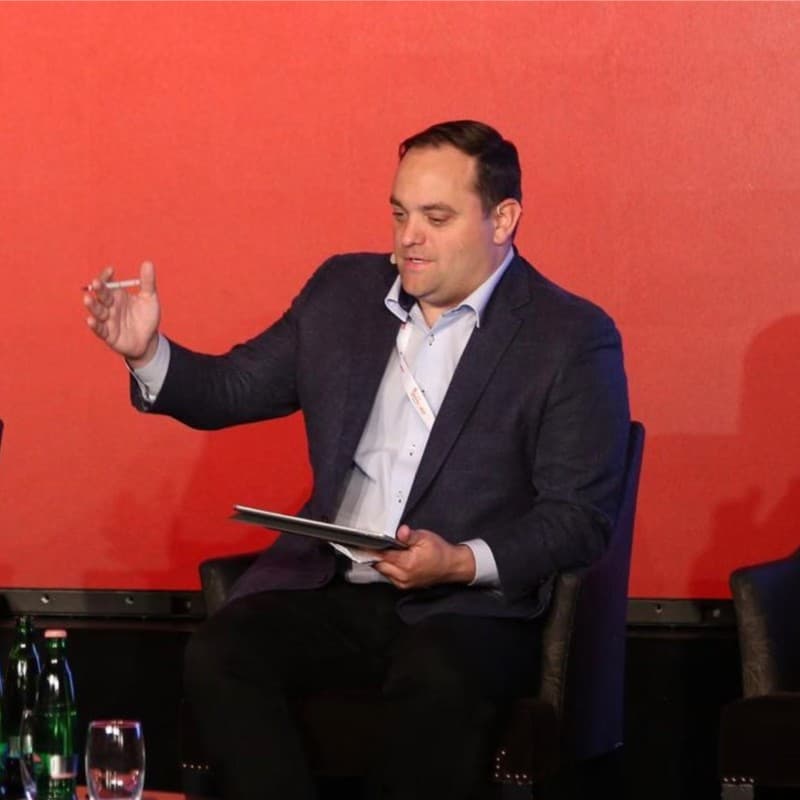
Those who invest in battery capacity and supply chains today are likely to dominate… for generations to come.

The end goal is creating a circular economy where recycling—not mining—becomes the primary source…

We will need to mine millions of tonnes of minerals… but we’re currently mining billions of tonnes of fossil fuels…
Access the most recent investor updates published by the company.
A curated collection of third-party content relevant to the company and sector to help inform your investment decision.
China's platinum reclassification and GFEX futures launch tighten PGM markets. Supply risks and hydrogen demand favor diverse developers like ValOre Metals in Brazil.
A circular economy could create a second supply source for the critical minerals used to make clean energy technologies for the global energy transition.
Tharisa has a well-established track record of chrome and platinum group metals production, and is now on the cusp of delivering significant growth through a move underground at its flagship South African mine and the establishment of new lines of production from a major new Zimbabwean project. The company is keeping a tight rein on costs, even as rising commodities prices push margins up, and it's in that context that the shares have doubled over the past 12 months. Even so, CEO Phoevos Pouroulis still argues that the company is undervalued compared to its peers. He joins us to tell us why he thinks that, and to provide details of what will happen next
Tharisa (LON:THS) Hits New 1-Year High - Time to Buy?
THARISA opened its 2026 financial year on promising terms saying on Tuesday metal recoveries had improved amid higher average prices for platinum group metals that could edge yet further. Commenting on the firm’s operational performance for the three months ended December, (Tharisa has a September year-end), CEO Phoevos Pouroulis said: “leading indicators across the business […]
Meet the experienced professionals leading our organization
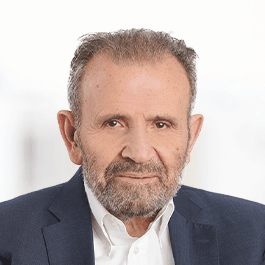

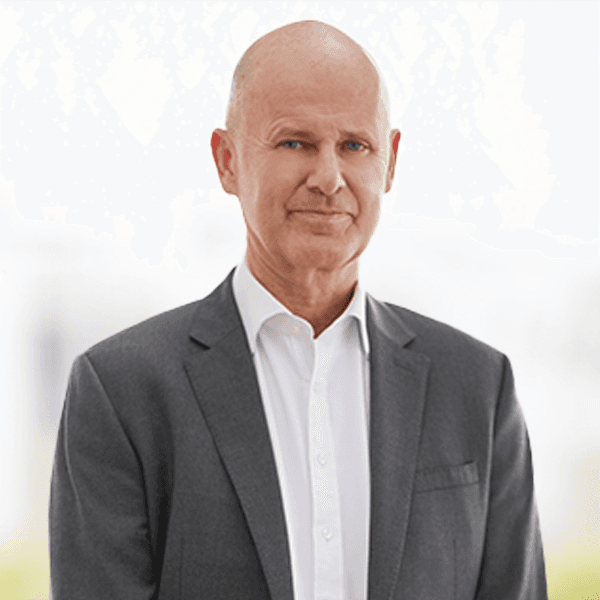
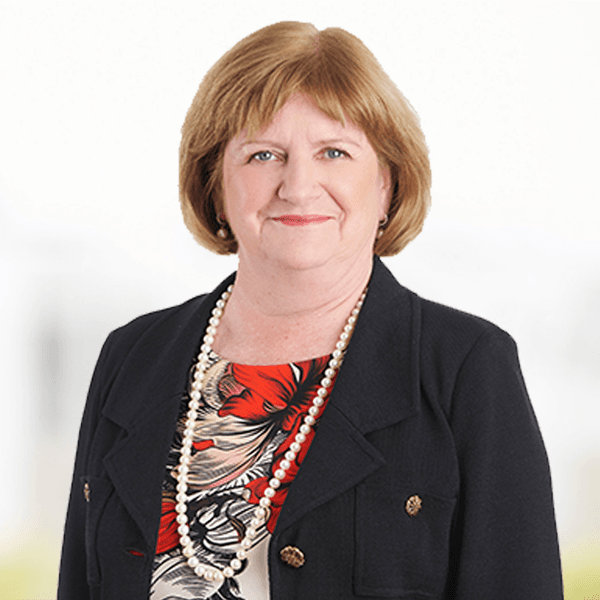
Here are the questions that professional investors are asking before making an investment decision.
Management estimates all-in PGM costs of $571/oz, with chrome effectively subsidising this cost down to a negative $445/oz per platinum ounce sold. This gives it resilience even in downturns. However, professional investors are also asking whether this cost advantage is sustainable as underground operations ramp up. The underground transition will change the cost structure, so ongoing cost discipline and the realisation of grade improvements will be key to maintaining margin stability. Investors want confidence that these margins are not only maintained during high-price cycles, but also hold up if the PGM basket retraces.
Karo needs ~$300m more capex. Tharisa has funded $193m to date, with a mix of bond refinancing, senior debt in final stages, and a $125m gold stream or strategic investment expected in 2026. Investors are asking whether the current funding structure provides sufficient headroom, particularly if commodity prices dip. They also want assurance that Karo can scale without materially increasing debt or diluting equity. Questions remain around local liquidity, dollar availability in Zimbabwe, and any FX repatriation risk, all of which influence Karo's perceived bankability.
The first megawatt-scale battery will be installed at Tharisa Minerals in 2026, with five more pilots planned globally. Tech is de-risked, long-duration, recyclable, and taps directly into Tharisa’s own chrome output. However, professional investors are pressing for details on commercial pricing, gross margins, and how Tharisa plans to monetise the tech, whether through licensing, partnerships, or vertical integration. The scale of the opportunity is potentially large, but questions remain on execution capability, manufacturing at scale, and customer adoption in a crowded long-duration storage landscape.
While upfront capex is $547m over 10 years, steady-state underground operations are expected to reduce dilution, improve grade, and stabilise costs. The DFS projects a mining cost of $40.8/t, comparable to current surface mining. Investors want more clarity on timing and risk: can this cost base be achieved if inflation or supply chain issues persist? Is the $40.8/t cost fully loaded, including capitalised development, or will costs fluctuate during the ramp-up? The underground operation’s efficiency is key to future profitability, and analysts are focused on execution risk during the transition phase.
Dividend policy is to pay out a minimum of 15% of net profit. For FY25, Tharisa paid 3 US cents per share and completed 87% of a $5m buyback. Future buybacks are paused pending capital commitments. Investors are asking how flexible this capital return policy is in different commodity cycles. Will dividends be maintained if PGM prices soften? How does management prioritise between returns and funding the growth pipeline? Some analysts are also probing whether the company could move to a progressive dividend model or introduce a more formalised buyback programme over time.
Tharisa
Tharisa mines platinum and chrome to fuel clean energy, rewarding shareholders along the way
LSE:THS
GBp115.00
340.73m
3.83
138k
Pricing delayed 15 mins. Jul 14, 2026 2:00 PM