Mips AB logo

Mips AB: A Head Start

A Swedish safety specialist whose low-friction helmet technology is used in a growing share of the world's bike, snow and motorcycle helmets. Through a pivotal acquisition it is now expanding into workplace saftety, firefighting and body protection.

OTC:MPZAF
$26.000
Updated: Aug 04, 2026
Consumer
smalleurope

Bull & Bear Case

An overview of the main reasons to invest and the key risks involved.

Bull Case

A Badge Buyers Look For

A globally recognised safety mark brands fit to show shoppers their helmets protect better.

A Licensing Model Creating High Margins

Licensing rather than manufacturing keeps costs low and gross margin above 70%.

Expanding From Bike Shops to Building Sites

Acquired technology opens new markets in workplace safety, firefighting and body protection.

Bear Case

Someone Else Controls the Sale

Mips only earns when its customers sell helmets and so it is dependent on their performance.

Paid in Dollars, Reports in Kronor

Most invoices are in US dollars while accounts are in Swedish kronor, so currency swings can impact profits.

Copycats and Patent Fights

Rivals develop their own anti-rotation systems, and defending patents can be costly.

Executive Summary

About Mips

Mips sells a thin, low-friction layer that sits inside a helmet, letting the shell slide a few millimetres on impact so less twisting force reaches the brain. Helmet brands buy the part and the right to display the yellow Mips badge, and helmets fitted with it usually carry a price premium starting at USD 15-20 (Mips, business model page, 2026).


The model is what the company calls an **ingredient brand**: Mips never makes or sells a helmet itself. It supplies component kits plus a licence to helmet manufacturers across three groups, which it labels **Sports** (bike and snow), **Moto** (motocross and road motorcycles) and **Safety** (workplace and industrial helmets). Sports is by far the largest.

In December 2025 Mips bought Koroyd, a Monaco-based specialist in an impact-absorbing honeycomb material, and with it a set of markets the business could not reach on its own. Koroyd's technology already sits in helmets, but it has been moving into body protection, protective gloves and footwear, categories where Mips had no product to sell. The deal also strengthens the push into workplace safety, where growth is driven by employers and regulation rather than by shoppers choosing a helmet in a bike shop.

For investors, this is a rare thing: a small company with a recognised consumer brand, a licence fee on every unit sold and very little cost to carry. Safety is becoming a purchase decision rather than a regulatory box, and the acquisition of Koroyd extends Mips' opportunity well beyond cycling.

Investment Thesis

Overview of buy and sell case of the business.

Why Invest?

Key pieces of information about the business that you need to know about.

A Badge Buyers Look For

The small yellow dot tells a buyer the shell contains a low-friction layer designed to reduce the twisting forces that cause most brain injury in an angled crash. Behind it sit more than 30 years of research with Sweden's Royal Institute of Technology and the Karolinska Institutet. Brands fit the mark because it shows customers a helmet has been designed against that specific danger, and shoppers pay for the reassurance: a fitted helmet typically carries a retail premium starting around USD 15–20. Only a fraction of the helmets sold worldwide currently carry the technology, and growth comes from winning a larger share of the models a brand already makes. A bigger helmet market would help, but it is not what the case depends on. Sales have risen in regions where consumer demand was falling, simply because more models carried the dot.

A Licensing Model Creating High Margins

Mips supplies a component kit and licenses the technology, then collects a fee on each helmet the brand sells. Production of the components is contracted out and the helmet brand handles moulding, painting, warehousing and shipping, so the group runs on little more than a hundred employees and very little equipment of its own. Gross margin has held above 70% for years, and its durability was proven when it barely moved even as sales nearly halved through the post-pandemic bike downturn. The stated long-term ambition is an operating margin above 50%, with more than half of net earnings returned as dividend.

Expanding From Bike Shops to Building Sites

The larger opportunity now sits away from sport. Workplace and firefighting helmets, body protection, gloves and footwear are bought on regulation and procurement cycles rather than consumer taste, a slower sell but a steadier one. Access came through the purchase of Koroyd, a specialist in aerospace-derived impact-absorbing honeycomb, which also adds a second safety product that sits alongside the Mips layer rather than replacing it. Two components inside one helmet model lift the value captured per unit with no new brand relationship to win. Safety remains the smallest of the three helmet categories, so growth rates there start from a low base.

Catalysts

The key events that could drive investment opportunities and shift markets.

Near term
Koroyd Cross-Selling:
  • Koroyd Put Into More Helmet Models: Existing and new customers have shown interest in building Koroyd's impact-absorbing material into their helmets. Each integration raises the value of components Mips sells per model, turning one acquisition into a broader product list.
  • Near term
    Dräger Firefighting Launch:
    • First Step Into Firefighting Helmets: A tie-up with Dräger, a well-known fire and safety equipment brand, takes the technology into firefighter head protection. Reaching production would open a workplace-safety market where the company has had almost no presence.
    Medium term
    Quarterly Reporting Cadence:
    • Quarterly Evidence the Recovery Is Holding: Results arrive each quarter, and every report tests whether organic growth and the margin rebuild are continuing.
    Medium term
    Beyond Helmets:
    • Moving Beyond Head Protection Altogether: Koroyd has launched into body protection, protective gloves and footwear. Customer interest in that wider range would take Mips outside helmets for the first time in its history.
    Long term
    SEK 2 Billion Target:
    • The 2029 Sales Target: Management targets net sales above SEK 2bn no later than 2029, alongside an operating margin above 50%. Reaching it would mean roughly quadrupling the SEK 533m booked in 2025.
    Long term
    Asia Market Building:
    • Asia and Australia as a Third Market: The region is a small slice of sales next to North America and Europe, but has returned to growth after a soft spell. Broader adoption there would add a third significant market.

    Key Risks

    Key pieces of information about the business risks that you need to know about.

    Someone Else Controls the Sale

    Mips does not sell to the public. It sells to helmet brands, who decide how many helmets to make and how many models get the technology. When retailers overstock and then stop ordering, as happened after the pandemic cycling boom, revenue can fall sharply even though nothing about the product has changed. Sales roughly halved over that cycle. Being an ingredient supplier keeps costs low, but it also means the business sits one step removed from the customer and cannot fix a demand problem on its own.

    Paid in Dollars, Reports in Kronor

    Licence fees are invoiced in US dollars, components are sold in Chinese renminbi, and the accounts are published in Swedish kronor. Exchange rates can therefore make a good year look ordinary or an ordinary one look good. A 10% move in the dollar shifts operating profit by roughly SEK 30m, and in one recent year a strong krona cut reported sales growth by around half. Nothing about the underlying business changes, but the reported numbers do.

    Copycats and Patent Fights

    The space the Mips layer occupies is worth competing for. Rival systems exist, some helmet brands develop their own, and the position rests on patents that occasionally need defending in court, which is expensive whether or not Mips is a named party. Independent testing also shows that fitting rotational protection does not automatically make a helmet safer, so the marketing advantage depends on continuing to perform well when others measure it.

    Follow the Experts

    Quickly navigate key insights from industry experts and leverage their knowledge and market intelligence.

    Dr Mazdak Ghajari

    Head of the HEAD Lab, Imperial College London

    Investor Materials

    Access the most recent investor updates published by the company.

    Key Documents

    Team

    Meet the experienced professionals leading our organization
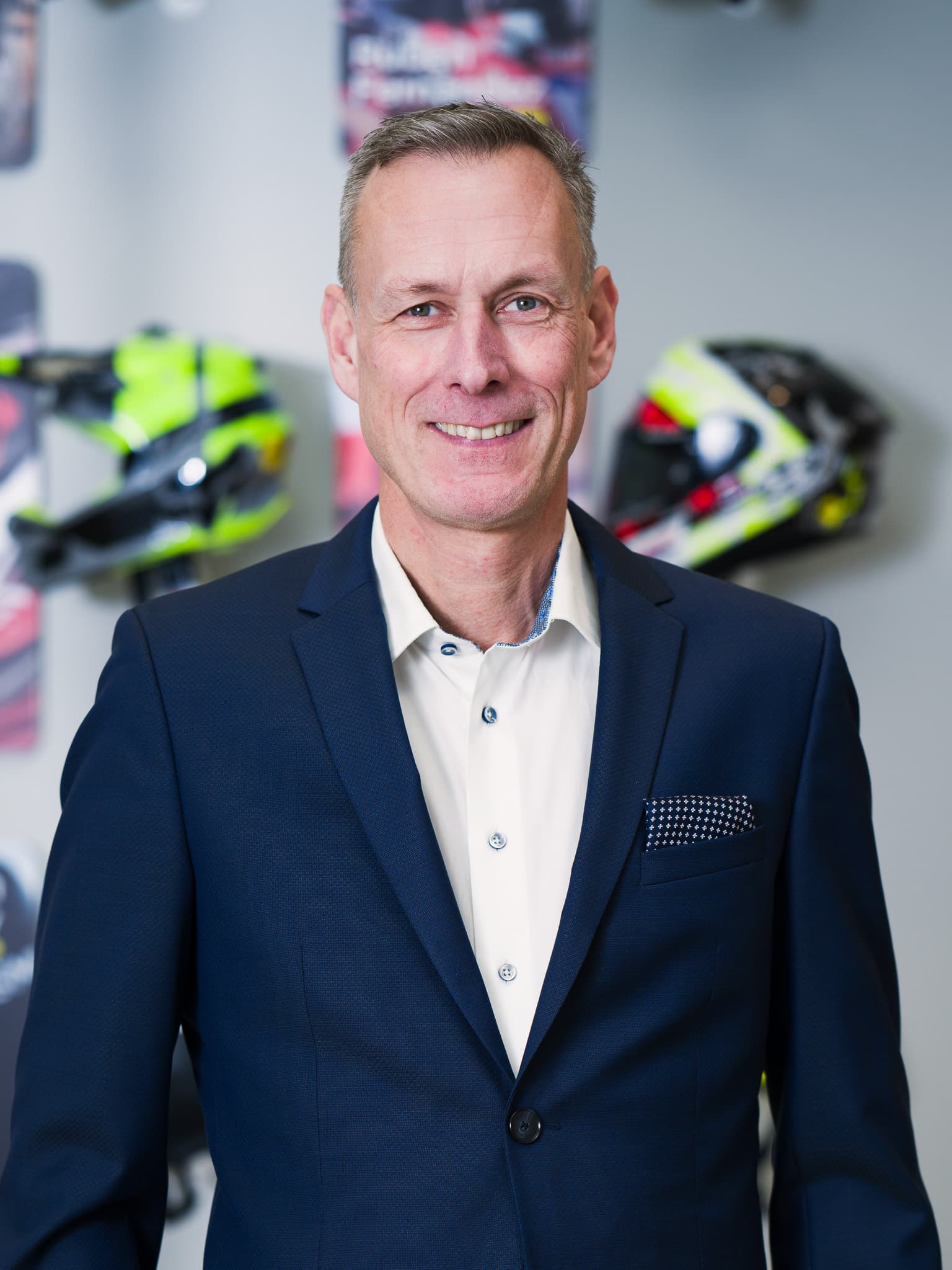
    Max Strandwitz - undefined

    Max Strandwitz

    Karin Rosenthal - undefined

    Karin Rosenthal

    Cedric Marmeys - undefined

    Cedric Marmeys

    Piers Storey - undefined

    Piers Storey

    What the Pros are asking

    Here are the questions that professional investors are asking before making an investment decision.

    If Mips does not make helmets, what exactly is the customer buying?

    Two things bundled together. The physical part, a low-friction layer and its attachments, and the licence to display the Mips badge on the finished helmet. Mips describes its revenue as sales of component kits covering both licence and components, plus a smaller line of engineering services where it adapts the design to a specific helmet model. The badge matters as much as the plastic, because it is what lets the brand charge more at retail.

    How much of the growth is real rather than currency or the acquisition?

    Mips separates the two itself. It reports headline growth and then organic growth, which strips out currency moves and acquired sales. In the first half of 2026 headline growth was 53% while organic growth was 35%; the gap is Koroyd plus exchange rates. The organic number is the one management uses to judge underlying performance, and it is the honest place to start.

    Why did profit margin fall in 2025 if the business is so profitable?

    Two costs, both identified in the accounts. Legal costs of SEK 43m for supporting a US customer in a patent dispute, and a strong Swedish krona reducing the value of dollar invoices. Gross margin, which reflects the actual product economics, barely moved. The margin squeeze came from items below that line, not from the product getting cheaper.

    What would tell you the Koroyd deal is working?

    Helmet models that carry both technologies, and sales outside helmets. Mips paid SEK 682m including a performance-linked payment of SEK 273m, so part of the price only becomes due if Koroyd delivers. Watch whether the Safety category keeps growing once the acquisition stops flattering the comparison, and whether the body protection, glove and footwear lines convert interest into orders.

    How dependent is Mips on a handful of customers and regions?

    Quite dependent on both. Revenue is concentrated in North America and Europe because that is where most helmet brands are based; Asia and Australia is much smaller. Within Sports, the bike sub-category drives the numbers. Mips also flags customer insolvency in the supply chain as a live risk it monitors, since it sells on terms where the buyer takes on transport and tariff costs.

    Does management have money on the line?

    The company runs warrant programmes for senior executives and key staff, approved at the 2023 annual general meeting, with exercise prices set above the share price at launch, so participants only gain if the shares rise. Total warrants issued could dilute existing holders by roughly 1.6%. Mips has also paid a dividend every year under a policy of returning more than half of annual net earnings, though the 2025 payout was cut sharply after the Koroyd purchase.