Hollywood Bowl Group plc logo

Hollywood Bowl Group plc: Cheap Nights Out, Big Margins

Britain's largest ten-pin bowling chain sells a night out that a family of four can afford for under £26. The real money comes once people are through the door, from arcade games, food and drink, which is where the company makes its profits.

LSE:BOWL
$278.00+0.54%
Updated: Aug 17, 2026
BLT (Business Services, Leisure, Travel)
smalluk

Bull & Bear Case

An overview of the main reasons to invest and the key risks involved.

Bull Case

Arcades, food and drink lift spend per visit

Extra spending inside the centre earns more than the bowling itself, raising money made per customer.

Cheapest branded bowling keeps families coming

A family of four bowls for about £26, which holds demand up when budgets tighten.

Canada gives it a second country to fill

It is the biggest branded operator in a fragmented Canadian market and its number of venues here continues to grow.

Bear Case

Bowling visits can fall in hot, dry weather

Long spells of fine weather pull customers outdoors and away from indoor leisure centres.

Wage and property costs keep rising

Minimum wage rises, employer taxes and business rates all push up the cost of running centres.

New centres can disappoint and be written down

Sites facing tough local competition have been written down when trading fell short of plan.

Executive Summary

About Hollywood Bowl Group

Hollywood Bowl Group runs large bowling centres, most of them on out-of-town retail parks alongside cinemas and restaurants, trading as Hollywood Bowl in the UK and Splitsville in Canada. Customers pay to bowl and then spend again on arcade machines, diners and bars, and those extras account for more than half of sales. The group also supplies and installs bowling equipment in Canada.

The case rests on cheap, all-ages entertainment holding up when household budgets are squeezed, and on room to open many more centres in both countries. In short, this is a bet that affordable family outings keep filling lanes, that customers keep spending on food, drink and games once they arrive, and that the pipeline of new sites turns that formula into growth.

Investment Thesis

Overview of buy and sell case of the business.

Why Invest?

Key pieces of information about the business that you need to know about.

Arcades, food and drink lift spend per visit

Suggested revision

Bowling gets people through the door, but it brings in barely half of revenue. Arcade machines, diners and bars make up the rest, with amusements alone close to a third of UK sales. Because customers linger once they are inside, the company can lift the money it earns per visit without putting up the headline price of a game. The arcade machines themselves are paid for by the supplier rather than bought outright by Hollywood Bowl, so the line-up of games stays fresh without Hollywood Bowl carrying the full cost of replacing tthem.

Cheapest branded bowling keeps families coming

A family of four can bowl at peak times for about £26 in the UK and CA$32 in Canada, and the company describes itself as the lowest-priced branded bowling operator. Headline prices have been raised by less than inflation for several years, so a game has become relatively cheaper since 2021. Rivals in competitive socialising, the trend of pairing an activity with drinks, are mostly adult-focused and city-centre based, leaving the family market to Hollywood Bowl.

Canada gives it a second country to fill

The Group entered Canada in 2022 by buying a small chain and has grown it into the country's largest branded bowling operator, now around a sixth of group revenue. The Canadian market is fragmented, with roughly 180 mostly independent centres and no branded chain of scale, and management has identified 40 potential new sites. UK systems, buying power and management practice transfer across, so each new venue costs less to run than a standalone operator's would.

Catalysts

The key events that could drive investment opportunities and shift markets.

Near term
  • New UK Openings: The next couple of years are largely about opening more centres in both countries and squeezing more spend out of each visit. Two further UK centres are due to open, including a Cardiff venue the company says will be its largest UK site, adding capacity in a prime retail location.

  • Canada Buyback And Dividend: The Group has said it will run a £5m share buyback in the second half of the current financial year and pays dividends set at 55% of adjusted profit after tax, so a change in either would signal how management is weighing growth against returns.

Medium term
  • Canadian Pipeline Acceleration: Management has brought forward its target of 35 Canadian centres to 2032 from 2035, with five openings planned in the next financial year and 40 further locations identified, which would raise Canada's share of group sales.

  • Earn-Out Settlement: The remaining payment for the 2022 Canadian acquisition is calculated on that business's profit in the current financial year and capped at CA$17m, after which the cost stops flowing through the accounts.

Long term
  • Estate Target Of 130: The company aims to run 130 centres across the two countries by 2035, split 95 in the UK and 35 in Canada, up from a base of 92 at the end of the last financial year. Reaching it would materially widen the earnings base.

  • Refurbishment Cycle Restart: UK refurbishments were paused after heavy spending in recent years, with a return to the historical cycle expected from the 2027 financial year. Upgrades have historically been targeted at a 33% return on the money invested.

Key Risks

Key pieces of information about the business risks that you need to know about.

Bowling visits can fall in hot, dry weather

Bowling is indoor leisure, and extended warm, dry spells push customers towards outdoor activities. The company has flagged record hot, dry UK spring and summer weather as a real trading headwind, with game volumes falling even while spend per game rose. Its own climate work identifies changing customer behaviour in warmer weather as a long-term risk. Marketing and dynamic pricing soften the effect but cannot remove it.

Wage and property costs keep rising

Centres need staff, and UK minimum and living wage increases plus higher employer National Insurance have pushed centre payroll up faster than sales. Business rates are also expected to rise after property revaluation. Staff and property together are the biggest controllable costs, so when they climb faster than revenue the profit margin on each pound of sales is squeezed, even with prices held low deliberately.

New centres can disappoint and be written down

Each new centre needs several million pounds of fit-out, and returns depend on picking the right site. The company has written down the value of a recently opened UK centre that was second to open in its local market and faces intense competition, alongside earlier write-downs at its mini-golf sites. Write-downs are accounting charges rather than cash, but they show that not every opening reaches the returns management targets.

Follow the Experts

Quickly navigate key insights from industry experts and leverage their knowledge and market intelligence.

Douglas Jack and Ivor Jones profile

Douglas Jack and Ivor Jones

Analysts, Peel Hunt

23K followers audience

Expert Insights

Hollywood Bowl's value proposition is "compelling", with UK pricing rising at a compound annual growth rate of 1-2% since 2019 while sales and post-central EBITDA per outlet have both risen 35%.
Graeme Smith profile

Graeme Smith

Managing Director, AlixPartners

3,141 followers audience

Expert Insights

"This week, we release AlixPartners' 2026 Global Consumer Outlook, and the implications for the hospitality sector are striking. Drawing on insights from 13,000+ consumers across nine countries, our research shows a clear shift toward tighter budgeting in 2026... It all points to lots of opportunities for growth in 2026."

Investor Materials

Access the most recent investor updates published by the company.

Company Documents

HollywoodBowl AR25 Full report

PDF

Combined with FIN statements FINAL (3)

PDF

s519 Statement PIC Hollywood Bowl Group Plc

PDF

Team

Meet the experienced professionals leading our organization
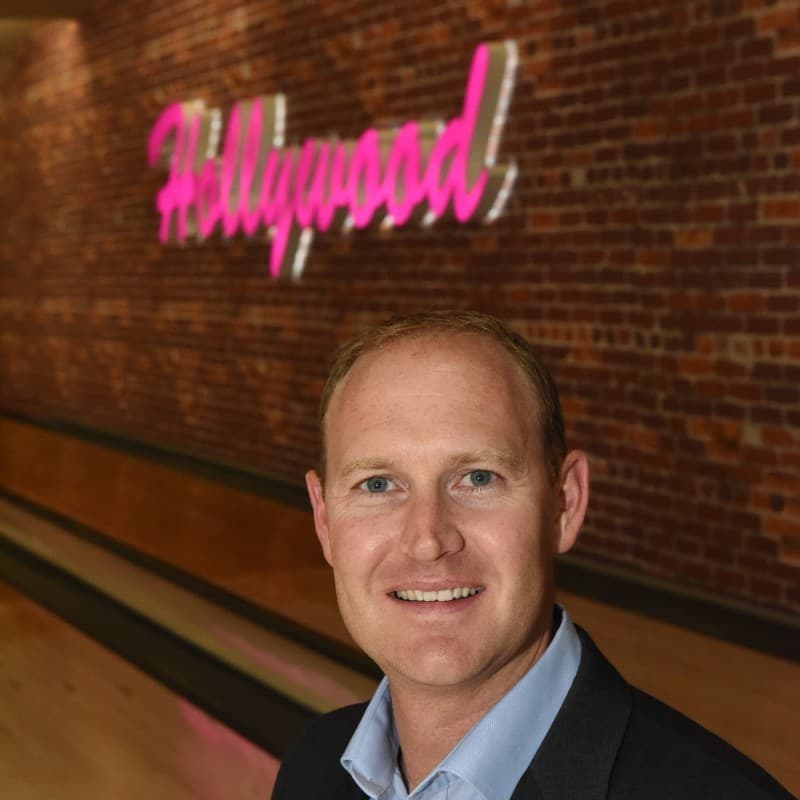
Darren Shapland - undefined

Darren Shapland

What the Pros are asking

Here are the questions that professional investors are asking before making an investment decision.

How does a bowling company actually make its money?

Customers pay to play a game, and then spend again while they are in the building. Bowling is a little under half of revenue; the rest comes from arcade machines, food, drink and extras such as mini-golf or e-darts. In Canada the Group also sells and installs bowling equipment through a separate business. Because the extra spending happens on the same visit, the company focuses hard on average spend per game rather than just on ticket prices.

Why keep prices so low if costs are going up?

Affordability is deliberately the core of the proposition rather than a temporary promotion. Management has raised headline prices by less than inflation for several years so that a family of four can still bowl for around £26 in the UK, keeping the customer base broad when budgets are tight. Profit is then protected by earning more from arcades, food and drink, by dynamic pricing that charges more at busy times and less off-peak, and by tight control of staffing hours.

What is 'competitive socialising' and who else is in it?

Competitive socialising is the industry's phrase for venues that combine an activity with eating and drinking, so bowling sits alongside mini-golf, darts, table tennis and karting concepts. Many newer entrants are adult-focused and based in city centres, while Hollywood Bowl targets families in out-of-town retail parks with parking. That different location and audience is what the company argues protects it, though these operators still compete for the same discretionary leisure spending.

Is the Canada business actually working, or is it a distraction?

Canada has grown from a small acquired chain in 2022 into the country's largest branded bowling operator and roughly a sixth of group revenue, which suggests the UK playbook transfers. Refurbishments of the acquired sites are largely finished and the newest purpose-built centres are the ones lifting average returns. The open questions are whether new openings keep hitting the return targets management sets, and how quickly Canadian profitability catches up with the more mature UK estate.

Does the management team own shares in the business?

Yes, and materially so. Executive directors are required to hold shares worth at least twice their salary, and the long-serving chief executive and other executives hold well above that requirement. Long-term share awards vest against earnings per share, returns on the money invested in centres, carbon intensity and staff development targets, measured over three years with a further two-year holding period. Several non-executive directors also hold shares personally.

How much of the profit comes back to shareholders?

The stated policy is to pay out 55% of adjusted profit after tax as an ordinary dividend, split between an interim and a final payment, and the Group has also run share buybacks that reduce the number of shares in issue. Cash generation is strong because customers pay upfront and the business carries no bank debt drawn against its facility. Spending on new centres and refurbishments competes for the same cash, so the balance can shift year to year.