A Brand-New Factory, Already Sold Out
World's most advanced peptide plant just opened, largely pre-booked, driving 35–45% guided local-currency growth.

An overview of the main reasons to invest and the key risks involved.
World's most advanced peptide plant just opened, largely pre-booked, driving 35–45% guided local-currency growth.
FDA move against unlicensed compounders and US onshoring rules both favour licensed Western manufacturers.
Barely any debt, plus CHF 369m in customer prepayments, funds the final stretch of expansion.
Revenue leans on a handful of huge customers, visible in sharp country-by-country swings.
Chairman himself flags that "things can go wrong" scaling complex production processes.
Chairman's own top risk is GLP-1 setbacks, with a strong franc adding pressure.
Weight-loss injections were just the opening act. Cancer treatments, Alzheimer's therapies and gene-silencing drugs increasingly rely on the same basic ingredient: peptides, short chains of amino acids that mimic the body's own chemical signals. More than 1,000 peptide programmes are active across the global pharma pipeline today, with 43% already in clinical development. Very few companies have the scale, regulatory track record and decades of chemistry expertise to produce peptides industrially. Bachem, a Swiss manufacturer with fifty years in the trade, is one of them.
That scarcity is colliding with fresh demand. Bachem has just launched the world's most advanced peptide factory, right as customers want more supply than it can currently produce. Years of heavy construction spending are giving way to a period where the business should generate far more cash than it consumes, while shifting regulation and new drug formulations point to years of extra volume ahead. That combination of scarcity, timing and cash generation is why investors are paying attention.
Overview of buy and sell case of the business.
Key pieces of information about the business that you need to know about.
Bachem has just switched on Building K, one of the world's most advanced peptide factories, at its Bubendorf site in Switzerland. Most of the new capacity is already booked under long-term contracts signed years in advance. Customers can't easily swap suppliers: a drug's regulatory approval is often tied to the exact factory that makes it, so qualifying a new supplier can take years. Management expects sales to grow 35–45% this year in local currencies, largely thanks to this one factory. Because most of the cost of running a plant like this doesn't change with volume, extra output should mostly turn into profit rather than expenses. The underlying profit margin was 30.2% in 2025 (stripping out one-off gains), and management expects that to climb into the "low thirties" in 2026.
For years, thousands of unlicensed pharmacies and online clinics sold cheaper copies of popular weight-loss drugs, filling a gap left by genuine shortages of the real thing. Those shortages are now over, and US regulators are moving to shut the loophole down: the FDA has sent out dozens of warning letters to these unlicensed sellers and has proposed banning the practice outright. The proposal isn't law yet. A public comment period only closed in June 2026, but it shows where the agency is heading. Separately, new US rules are pushing drugmakers to buy less from Chinese suppliers and more from Western ones. Both trends push business toward a small group of licensed, Western manufacturers, and Bachem is one of the biggest.
Bachem's balance sheet is in good shape. At the end of 2025, the company owed only CHF 26.4 million (Swiss francs) more than it had in cash: a tiny amount for a business this size, and less than a seventh of one year's profit. Customers have also paid CHF 368.7 million upfront for medicine they haven't received yet, up sharply from the year before, which gives Bachem cash in hand before it even ships the product. The business itself is throwing off much more cash too: money generated from operations more than doubled last year, to CHF 271.6 million, covering most of what the company spent building new factories without needing to borrow heavily or ask shareholders for more money. Spending on construction is expected to peak in 2026 and then start falling, just as the new plants begin earning revenue instead of costing money. If that plays out as planned, Bachem should move from a period of heavy spending into one where it generates real spare cash.
The key events that could drive investment opportunities and shift markets.
Building K fills up: First lines are ramping through 2026, feeding this year's 35–45% growth guidance.
Compounding rule finalised: If the FDA's proposed ban on bulk compounding is confirmed, more patients should shift back to licensed, branded supply.
Margin climbs toward the mid-30s: As the factory fills and currency drag fades, margins should keep climbing from the low thirties.
Sisslerfeld anchor deal: Bachem has banked a CHF 13.8m milestone payment for the site, though no anchor customer is signed yet. A deal would extend growth well beyond Building K.
Oral peptides multiply demand: More peptide pills need far more raw ingredient per dose than injections, so demand should keep rising for years.
Western reshoring accelerates: As new US rules limit Chinese biotech sourcing, more contracts should shift to established Western manufacturers.
Key pieces of information about the business risks that you need to know about.
Bachem doesn't disclose customer concentration directly, but its own numbers hint at it. In 2025, revenue invoiced through Ireland nearly doubled to CHF 100.3 million, while revenue invoiced through Denmark fell 17% to CHF 93.6 million: a sizeable swing that points to how much Bachem's growth rides on the invoicing entities of a handful of very large pharmaceutical customers. If one of those relationships shifted, say through a lost contract or a failed trial, the impact on Bachem's numbers could be significant, and outside investors have little visibility into exactly how exposed the company is.
Chairman Kuno Sommer has been direct about this in Bachem's own annual report: "there is always a certain amount of risk involved in production, as things can go wrong in complex production processes." A 35–45% growth range is unusually wide for a company that rarely misses guidance, and that width reflects genuine uncertainty about ramping a brand-new, highly automated factory to full commercial output. Building K only cleared its regulatory inspection at the end of 2025. Delays or manufacturing hiccups, whether in yield or quality, could push back the profit inflection investors are counting on.
Asked directly what he saw as Bachem's biggest risk, Chairman Kuno Sommer pointed to the drug class itself: "One major risk is certainly that GLP-1 therapies may not work as expected or that late side effects may emerge." Bachem also makes ingredients for cancer, brain disease and rare disease treatments, but its newest capacity is overwhelmingly geared toward the metabolic boom. On top of that, the strong Swiss franc has been a real drag: it contributed to a net financial loss of CHF 10.9 million in 2025 (versus a small gain in 2024), driven mainly by a CHF 10.7 million foreign exchange loss, and management has flagged a further meaningful currency headwind for 2026.
Quickly navigate key insights from industry experts and leverage their knowledge and market intelligence.

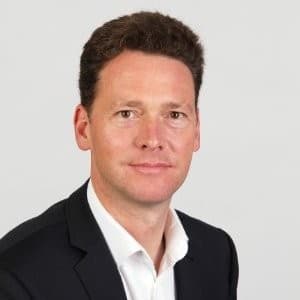
"We are seeing a rising demand from our customers [for peptide manufacturing, mainly GLP-1 drugs]."
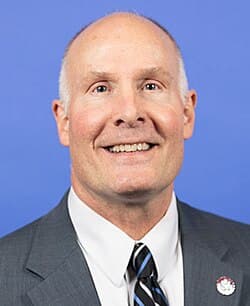
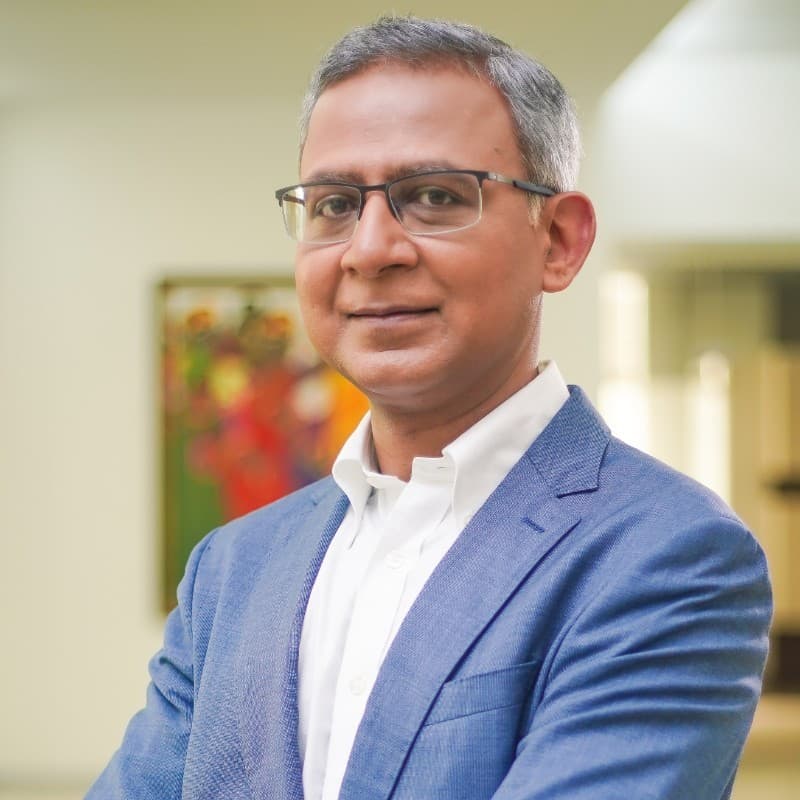
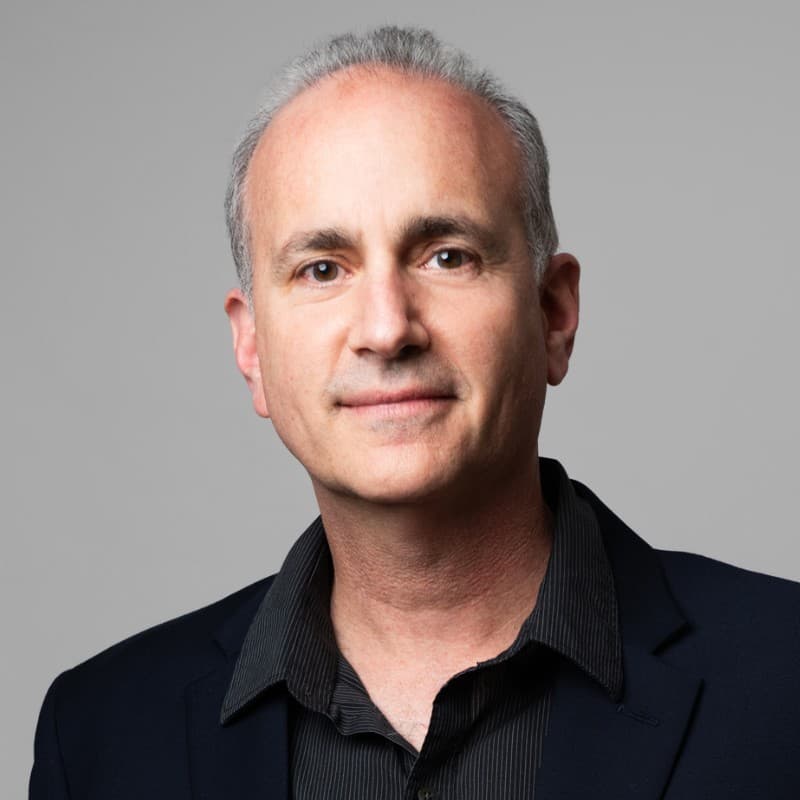
"A peptide hormone typically has extended binding interactions with the receptor … exactly mimicking these interactions with a small molecule is impossible. Layering on requirements for optimal pharmacological profiles and drug-like properties to support oral dosing adds another level of complexity."
Access the most recent investor updates published by the company.
At Bachem, we believe in open and transparent dialogue with both the financial community and public media. Find out current share price information.
A curated collection of third-party content relevant to the company and sector to help inform your investment decision.
A pill version of the popular GLP-1 weight-loss drug Wegovy has been green-lit for use in the U.S. Here’s what that means for health care
Meet the experienced professionals leading our organization
Here are the questions that professional investors are asking before making an investment decision.
Across the industry-wide Phase 3 peptide pipeline that Bachem itself tracks, metabolic indications account for 32% of projects, with oncology at 30%, hormonal at 9%, and the rest split across neurology, cardiovascular and other areas. On paper, that looks like genuine diversification. In practice, nearly all of Bachem's newest capacity and its fastest-growing division, CMC Development, is being filled by metabolic and obesity-linked work. Bulls argue the platform story is real over a longer horizon, since today's weight-loss revenue is funding capacity that other therapeutic areas will eventually use too. Sceptics see a company whose near-term numbers depend on one drug class, dressed in platform language.
Bachem is large, but it isn't alone. Rivals including CordenPharma and PolyPeptide are also expanding peptide manufacturing capacity, and Berenberg's own research note pegs Bachem's market share at roughly 25%, alongside more than 170 projects in its development pipeline and a track record commercialising a third of all approved peptides. Bulls read that as a widening lead, since scale and regulatory history compound over time. Sceptics point out that every competitor benefits from the same GLP-1 boom and the same BIOSECURE-driven shift away from China, so the tailwind may be lifting the whole sector rather than Bachem specifically. Whether Bachem's share of new contracts is actually growing, or merely holding steady, is not yet visible in public data.
Bachem has bought all five plots of land for its planned Sisslerfeld site, totalling 155,000 square metres, and has already recognised a CHF 13.8 million milestone payment tied to the project. What it hasn't done, as of early 2026, is sign a binding anchor customer, the kind of commitment that let Building K get built with demand already locked in. Without one, Sisslerfeld risks becoming undeveloped land sitting on the balance sheet rather than the next leg of growth. Management's continued investment in planning and infrastructure suggests confidence that a deal will land, but until it does, the site adds cost without adding a guaranteed growth story.
The FDA's move against unlicensed compounders and the BIOSECURE-driven shift away from Chinese suppliers both push more orders toward licensed Western manufacturers like Bachem. What's less clear is whether that translates into better pricing on each order, or simply more orders at existing rates. The margin story in this piece rests on operating leverage: fixed costs spread over more volume, not necessarily higher prices per gram. Bachem hasn't disclosed unit economics or pricing trends specifically, so it's difficult to know from outside whether regulation is handing the company genuine pricing power or just a fuller factory. The distinction matters for how durable the margin gains prove to be.
The bull case assumes that oral weight-loss drugs are good news for Bachem, since oral peptide formulations need far more raw ingredient per dose than injections. But not every oral GLP-1 drug in development is a peptide. Eli Lilly's orforglipron, for instance, is a small molecule made through conventional chemistry, not peptide manufacturing, and would bypass companies like Bachem entirely if it succeeds commercially. Bulls note that peptides retain real pharmacological advantages that small molecules struggle to replicate. Sceptics see a genuine fork in the road: if cheaper, easier-to-manufacture small-molecule pills win the mass market, the oral shift could end up diverting demand away from peptide manufacturers rather than multiplying it.
Bachem Holding
The Swiss manufacturer behind the world's fastest-growing medicines is about to turn its newest factory from a cost into a cash machine.
SIX:BANB
CHF70.25-1.26%
5.26b
35.93
94k
Pricing delayed 15 mins. Jul 21, 2026 5:00 AM