Alstom logo

Alstom: Realise the Power of Rail

Alstom builds the trains, metros and signalling systems that public transport authorities buy once and then pay for decades to maintain.

EURONEXT:ALO
$15.88+0.47%
Updated: Aug 13, 2026
Industrials
largeeurope

Bull & Bear Case

An overview of the main reasons to invest and the key risks involved.

Bull Case

Signed orders give years of revenue visibility

A backlog above one hundred billion euros means most future revenue is already contracted.
Maintenance contracts run for decades

Servicing fleets it built produces steadier, longer-lasting income than one-off train sales.

Only a handful of firms can bid

Building and certifying trains at scale limits competition to a very small group.

Bear Case

Big rolling stock projects keep missing margins

Problem contracts on new train platforms have repeatedly held group profitability below plan.

Cash arrives years after the work

Customer down payments come early, then Alstom funds production long before final payments.

Public budgets and politics decide demand

Almost every customer is a state operator, so spending choices sit with governments.

Executive Summary

About Alstom

Alstom builds trains. High-speed and regional trains, commuter fleets, metros, trams and locomotives, plus the signalling systems that keep them a safe distance apart, and in some cases whole turnkey networks. Its customers are mainly state railways and city transport authorities, which buy fleets and then pay Alstom for maintenance over years or decades. Annual revenue runs at roughly nineteen billion euros, with around 88,000 employees across 61 countries.

Demand for rail is strong and the order book stretches beyond a hundred billion euros. The argument is about execution: a few large train programmes have been costing more than planned, holding profitability and cash generation below the level management says the backlog should eventually deliver.

Investment Thesis

Overview of buy and sell case of the business.

Why Invest?

Key pieces of information about the business that you need to know about.

Signed orders give years of revenue visibility

Alstom's backlog, meaning work already contracted but not yet delivered, stood at €104 billion at 31 March 2026, against annual sales of around €19 billion. That is several years of revenue already sold. Because rail contracts are awarded years before the trains roll out, this visibility is structural rather than a one-off. It also means the debate about Alstom is usually about how profitably it delivers that work, not whether the work exists.

Maintenance contracts run for decades

Selling a train is only the start. Alstom increasingly bundles fleets with long maintenance deals: 30 years of full-service maintenance for Poland's PKP Intercity, 35 years in Wellington, a 30-year operations and maintenance contract on the Cairo monorail. Servicing generates a steadier flow of revenue than manufacturing, spread over the life of the fleet, and the company that designed the train is the natural party to look after it.

Only a handful of firms can bid

Very few companies can design a train, industrialise it, get it certified by national and European safety authorities and support it for thirty years. Alstom's realistic rivals are China's CRRC, Germany's Siemens Mobility, Switzerland's Stadler, Spain's CAF and Japan's Hitachi Rail. Certification alone takes years, as Alstom's own high-speed programme shows, which keeps newcomers out and means large tenders are usually contested by the same small group.

Catalysts

The key events that could drive investment opportunities and shift markets.

Near term
  • Order Pipeline: The next stretch is about proving the company can turn a very large book of signed work into steadier profit and cash, and the milestones below all point that way. Management has said it expects orders across the full year to exceed the value of sales delivered, with contracts in the Middle East, North America and the UK in the pipeline.

  • TGV M Service Entry: Alstom's new double-deck very-high-speed train received approval from European and French authorities to carry passengers, with revenue service starting from September. Around 190 trains of the platform are already on order across several customers.

Medium term
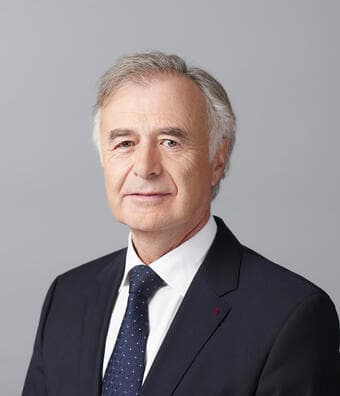
  • Capital Markets Day: Chief Executive Martin Sion plans to present the full operational plan and medium-term ambitions at an investor day in early 2027, which would set out how the company intends to lift profitability and cash generation.

  • Coradia Homologations: The first of six approvals for the Coradia regional train platform in Germany is expected around the end of the current financial year, according to the CFO. Approval allows delivery, and payments on those contracts are tied to cars handed over.

Long term
  • Backlog Margin Conversion: Contracts already in the backlog carry a gross margin of 18.0% as at March 2026. Management has said disciplined execution is intended to translate that over time into an adjusted operating margin of 8-10%, from around 6% today.

  • Thirty-Year Service Deals: Recent wins bundle trains with very long maintenance, including 30 years for Poland's PKP Intercity fleet, 35 years in Wellington and a 30-year operations contract on the Cairo monorail. These build a growing base of long-duration servicing revenue.

Key Risks

Key pieces of information about the business risks that you need to know about.

Big rolling stock projects keep missing margins

Rolling stock is roughly half the business, and new train platforms have to be industrialised and certified before deliveries flow. When engineering, supply chain or approval timing slips, production is paused and costs rise. Alstom has taken negative revisions on expected profit for some rolling stock contracts, and management has named project execution as the main reason group margins sat below plan.

Cash arrives years after the work

Customers pay a chunk up front, then Alstom spends heavily building trains long before the balance arrives on delivery. When several projects are ramping up at once, cash goes out faster than it comes in, which is why the company guides to a large cash outflow in the first half of its year before recovery in the second. Any delay to deliveries pushes that cash further out.

Public budgets and politics decide demand

Almost every buyer is a state railway, a city transport authority or a government-backed operator, so orders depend on public investment decisions and financing approvals rather than commercial cycles. Regional politics matter too: Alstom's own guidance assumes no further disruption from tensions in the Middle East, where it has operations and expects future contracts. Shipping cost spikes from the same region also feed into project costs.

Follow the Experts

Quickly navigate key insights from industry experts and leverage their knowledge and market intelligence.

Lucas Ferhani profile

Lucas Ferhani

Equity Research, Jefferies (London)

1,489 followers audience

Expert Insights

"Project execution is hampering the progress, specifically at FCF"
Maria Leenen profile

Maria Leenen

Managing Partner, SCI Verkehr

3,625 followers audience

Expert Insights

"In Europe, cost pressure is leading to more restraint in new-build procurement"

Alberto Mazzola profile

Alberto Mazzola

Executive Director, CER

2,251 followers audience

Expert Insights

"90 to 95% of what works for military mobility works for rail freight"

Team

Meet the experienced professionals leading our organization
What the Pros are asking

Here are the questions that professional investors are asking before making an investment decision.

How does Alstom actually make money from a train order?

Alstom is paid in stages across a contract that can run many years. A customer typically pays a deposit when the order is signed, then further amounts as cars are delivered, with the balance on completion. On top of the hardware, Alstom sells maintenance, spare parts and in some cases operating the service itself, which can run for thirty years or more. Signalling and whole-system projects work similarly. So revenue is recognised as work progresses, not when the order is announced.

If the order book is so big, why isn't the profit bigger?

The gap sits in execution rather than demand. Contracts in the backlog carry an average gross margin of 18.0% as at March 2026, but turning that into group profit depends on building trains at the cost and pace assumed when the contract was priced. New platforms need industrialising and safety certification, and when that slips the costs rise. Management has said its priority is tighter project management and better coordination between engineering, supply chain and manufacturing, with a medium-term ambition of an 8-10% adjusted operating margin.

Who else competes for these contracts?

The realistic competitor set is small. China's CRRC is the largest train maker by volume, Siemens Mobility of Germany competes across trains and signalling, Switzerland's Stadler and Spain's CAF are strong in regional and commuter fleets, and Hitachi Rail is active in high-speed and signalling. Barriers are high because a bidder needs design capability, factories, national and European safety approvals and the balance sheet to carry multi-year projects. Large tenders are usually contested by the same handful of names.

Why does Alstom burn cash in the first half of its year?

The pattern comes from how rail contracts pay out rather than from trading weakness. Customer down payments cluster around order signings, which fall unevenly through the year, while spending on production runs continuously. Alstom guides to roughly €1.5 billion of free cash outflow in the first half of the year to March 2027 followed by recovery in the second half, and has said down payments are deliberately weighted towards the later half. Investors watching the company track the full-year figure rather than the half.

What is signalling, and why does it matter to the investment case?

Signalling is the equipment and software that keeps trains a safe distance apart and controls how fast and how frequently they can run. Alstom supplies systems for both mainline railways and city metros, including communications-based train control, which lets trains run closer together and so raises capacity without laying new track. It matters because it is sold alongside trains, carries long software and upgrade tails, and is less exposed to the factory ramp-up problems that affect building rolling stock.